

When Faith Takes Away Our Freedom
May 18, 2025
When College Was Free
June 4, 2025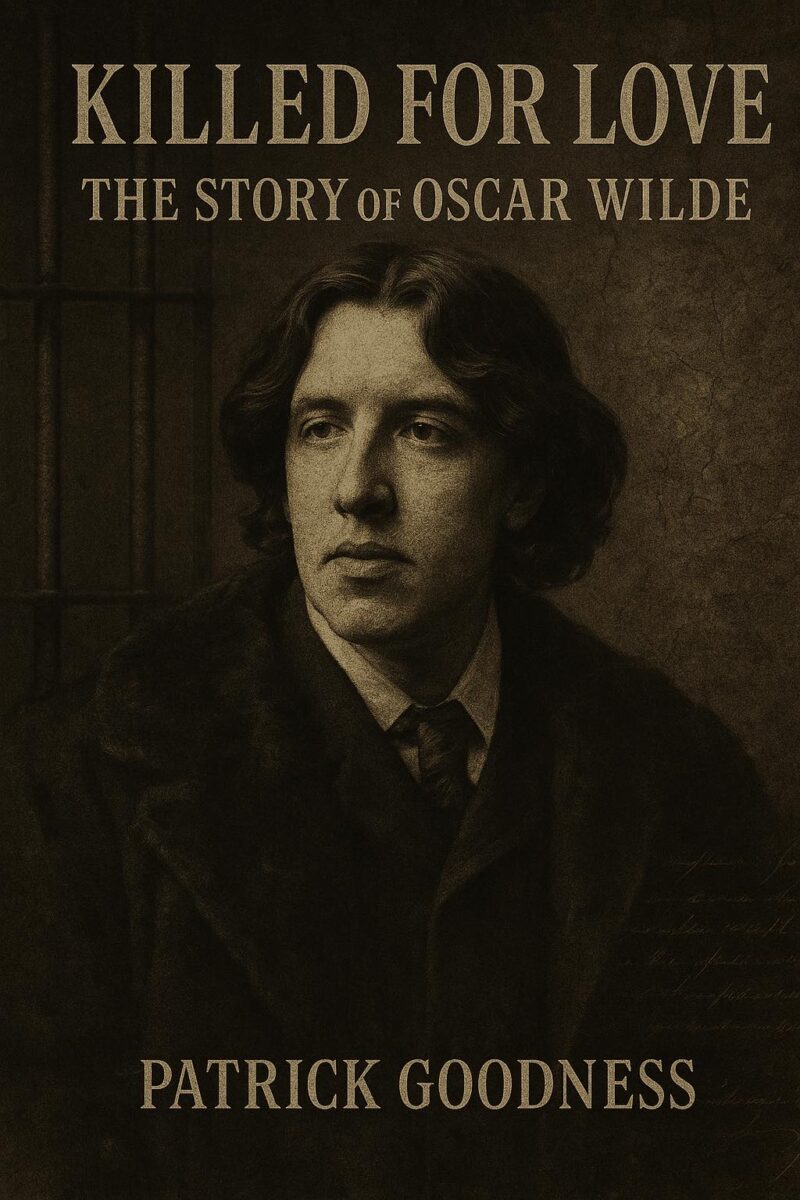
Killed For Love
The Story of Oscar Wilde
Pride Month draws attention to the dignity, resilience, and love of the LGBTQ+ community. It asks us to remember the painful history that made this celebration necessary. Pride was born not from comfort, but from struggle. It is both a defiant act of self-expression and a memorial for those who were silenced.
One of those voices, silenced too soon, was Oscar Wilde.
Wilde was more than a writer. He was a visionary, a wit, and a romantic who dared to live authentically in a world that condemned him for it. But behind his brilliance was a man broken by the religious and moral codes of his time; codes that saw his love as sin, his identity as shame, and his life as a cautionary tale.
What we discover is a tragic collision between Wilde’s homosexuality and the Christianity that judged him. We see how sacred texts have too often been twisted into tools of exclusion and violence. We remember that the fight for equality is also a fight to reclaim love from the grip of fear, faith from the hands of hate, and morality from those who have used it to destroy.
Pride month calls us to tell the truth. And this is one of those truths: Oscar Wilde was not punished for wrongdoing. He was punished for loving. And in remembering him, we commit ourselves to a world where no one is ever punished for that again.
Oscar Wilde and the Cruelty of Christian Morality
Oscar Wilde was one of the most brilliant, witty, and creative minds of his time. He gave the world unforgettable plays, poems, and stories. But behind the fame and charm was a man who was quietly, painfully at war with the world around him, because he loved in a way that society, and especially religion, refused to accept.
In the late 1800s, Wilde was arrested, tried, and sentenced to prison for “gross indecency” a legal phrase that meant one thing: being gay. But it wasn’t just the law that put him in chains. It was the Church. The Christian Church, for centuries, had used the Bible to label homosexuality as a sin, an abomination, something evil. These teachings didn’t just stay in the pulpit. They became the foundation for laws, for hatred, for shame, and for violence.
Wilde didn’t just break the law; he broke the rules of a society that had been taught to hate people like him. Those rules came straight from sermons and scripture. Christianity, in its moral certainty, taught generations to believe that love between two men was sick and sinful. So when Wilde was caught, society didn’t just punish him; they felt righteous doing it. That’s the cruelty of religion when it’s misused: it can convince good people to do terrible things, and to call it holy.
But what lies beneath this cruelty is something even more dangerous; the illusion of moral certainty. Religion, when it claims absolute truth, begins to rot from the inside. Because once you are certain that your version of morality is God’s own voice, you stop listening. You stop questioning. You stop evolving. You confuse obedience with goodness, and in doing so, you lose sight of compassion, nuance, and the beautiful, messy complexity of being human.
The Church did not just fail Wilde. It became blind to its own violence. It turned scripture into a weapon and morality into a cage. And that blindness wasn’t rooted in faith; it was rooted in fear masquerading as righteousness. The kind of fear that needs everything to be black and white, sinner or saint, man or woman, saved or damned. That fear builds systems. It passes laws. It destroys lives. And all the while, it claims to be love.
What makes Wilde’s story even more tragic is that he wasn’t anti-religious. In fact, he was fascinated by Jesus. Not the Jesus of the Church; the judgmental, rule-obsessed figure used to justify bigotry, but the Jesus who loved outcasts, forgave sinners, and suffered alongside the rejected. In prison, Wilde found comfort in that version of Christ. He saw his own suffering reflected in the story of a man who was mocked, beaten, and killed because he challenged the status quo and loved too deeply.
Wilde once wrote that “Christ was the first individualist in history.” That was how Wilde saw himself; someone who dared to live his truth in a world that demanded conformity. But for that truth, Wilde was destroyed.
After serving two years in a hard labor prison, Wilde was released in 1897, physically weakened and emotionally devastated. He spent his final years in exile in France, poor, disgraced, and alone. In 1900, at the age of 46, he died of meningitis; an illness likely worsened by the harsh conditions of his imprisonment. His last words, tinged with both irony and pain, are said to have been: “My wallpaper and I are fighting a duel to the death. One or the other of us has to go.”
His story is not just a personal tragedy. It’s a warning. When religion prioritizes control over compassion, when it claims to know the mind of God so precisely that it leaves no room for difference, it stops being a source of healing and becomes a source of harm.
Oscar Wilde was an extraordinary man and talent. He was a man who loved, and was punished for it. The real sin was not his love, but the hate preached in God’s name.
That sin is still with us.
This Pride Month, we honor his story not just by remembering his pain, but by dismantling the very systems that caused it; systems built on the dangerous lie that certainty is the same as truth, and that love must answer to law. Let us build something better: a world where faith humbles itself before love, and where no one is ever told they must suffer to be seen.