

The American Experiment
July 4, 2025
The Rise of Christianity
July 6, 2025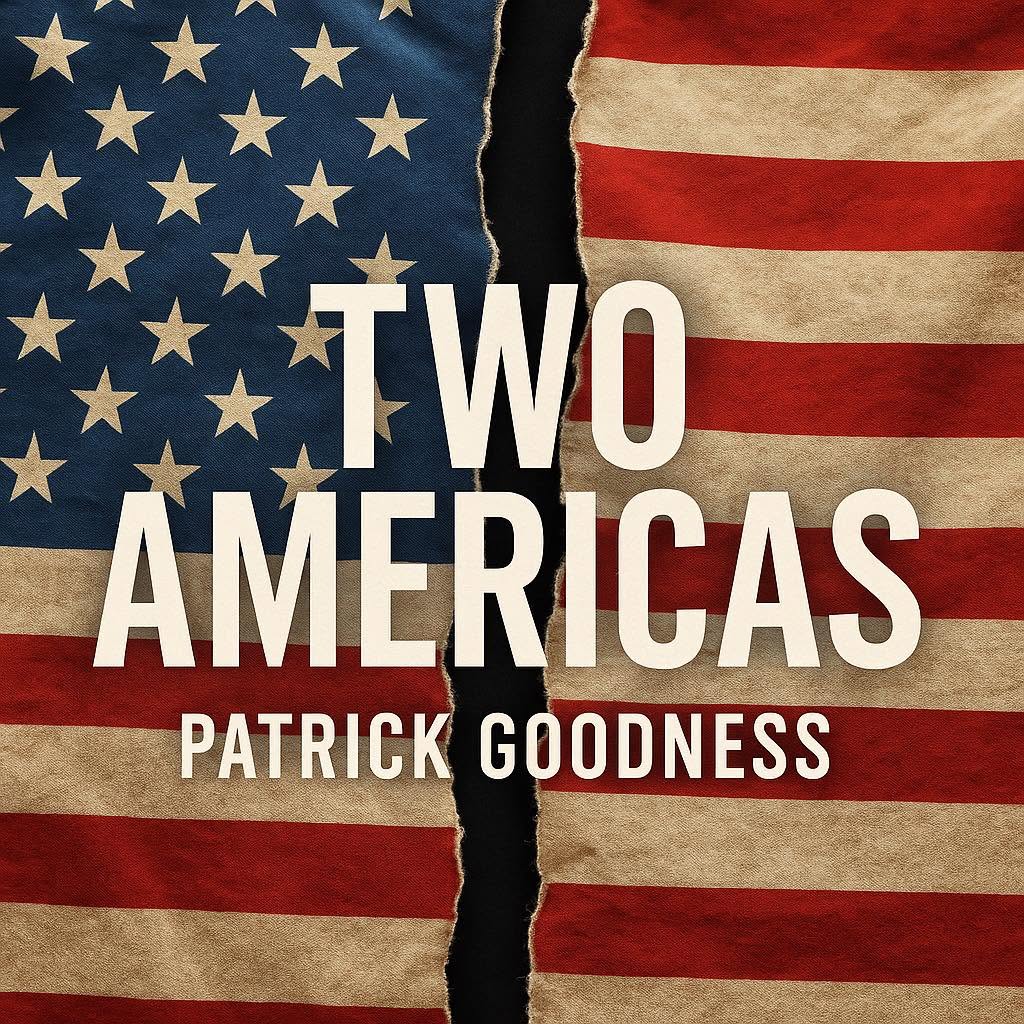
Two Americas:
One Nation, Divided
It’s July 5. The fireworks are over.
Yesterday, we celebrated our nation’s independence. I remember when this holiday united us and allowed us to set aside petty differences under the banner of our shared values and vision. But I’m afraid that the fabric of our national identity has been torn in two.
The “United States of America” doesn’t feel united anymore. It feels more like an outdated label slapped on a fractured country. America is no longer one nation but two…divided not just by party, but by values, facts, and visions of reality itself. The red and the blue no longer represent mere political preferences. They signify opposing moral universes, incompatible belief systems, and increasingly irreconcilable views of what America is and what it should be.
How Did We Get Here?
The seeds of division were always present, but they have been watered aggressively over the past four decades. The end of the Fairness Doctrine in 1987; a policy that once required news media to present balanced perspectives; marked a pivotal turning point. With its removal, right-wing media empires like Fox News emerged and flourished, feeding a steady diet of outrage, grievance, and manufactured enemies to millions of viewers. On the left, social media created echo chambers of progressive indignation. The algorithms didn’t care about truth; they rewarded emotional intensity. As a result, Americans stopped hearing each other, then stopped believing each other, and finally stopped seeing each other as fellow citizens.
Politics devolved quickly into tribal warfare. The GOP, once the party of limited government, morphed into a reactionary force obsessed with identity, grievance, and absolute loyalty. Donald Trump didn’t create this dynamic; he merely exploited it with terrifying skill. He gave voice to a culture of resentment, victimhood, and entitlement, who see themselves as righteous patriots. His base saw him not as a politician, but as a cultural savior sent to destroy the “other” side. The effect was not to disagree with opponents, but to dehumanize them. Democrats, for their part, often responded with elitism and cultural smugness, dismissing conservative fears as ignorance rather than engaging them with empathy or argument. I was definitely guilty of this.
Two Realities, One Country
Today, the two Americas live in separate realities. One side believes the 2020 election was stolen, that vaccines are a government conspiracy, and that climate change is a hoax. The other believes democracy is under siege, science is real, and that systemic racism is a moral emergency. One side wants fewer regulations, more guns, and Christian values enshrined in law. The other wants expanded civil rights, tighter gun control, and a clear separation of church and state. Each side views the other not as wrong, but as dangerous.
This is not just disagreement. It’s divorce. We don’t disagree about how to solve problems. We can’t even agree on what the problems are. We no longer share a common civic language. Terms like “freedom,” “truth,” and “justice” mean wildly different things depending on which America you live in.
The Geography of Disunion
The map tells the story: urban vs. rural, coast vs. heartland, educated vs. working class, diverse vs. homogenous. Republicans dominate in the South, Midwest, and Great Plains. Democrats win big in cities and along the coasts. Increasingly, people self-sort—not just by zip code, but by worldview. They shop at different stores, watch different media, send their kids to different schools, attend different churches (or none at all), and elect politicians who reflect their fear, not their hope.
When people say “civil war,” they often imagine blue and gray uniforms and muskets. But this war is cultural. It’s psychological. It’s digital. And in many ways, it’s already happening.
What Now?
The question is no longer will we become two nations. It’s whether we can survive as one.
Reconciliation seems unlikely in the short term. The political incentives reward division. Gerrymandering, voter suppression, and dark money have all calcified power in ways that discourage compromise. Social media continues to pour gasoline on the fire. Our leaders are no longer stewards of unity, but performers for their most extreme audiences.
So what do we do? We remember that democracies don’t die overnight. They rot slowly from within. We teach media literacy and civic responsibility. We rebuild institutions with transparency and accountability. We talk. Yes… we should really talk—to people outside our bubble. And above all, we should stop treating politics like religion and start treating it like a public responsibility.
Because if we don’t, the phrase “United States” will become a historical relic; an ironic artifact from a time before the great unraveling.