

Two Americas One Nation, Divided
July 5, 2025
Why You’re Not Rich
July 11, 2025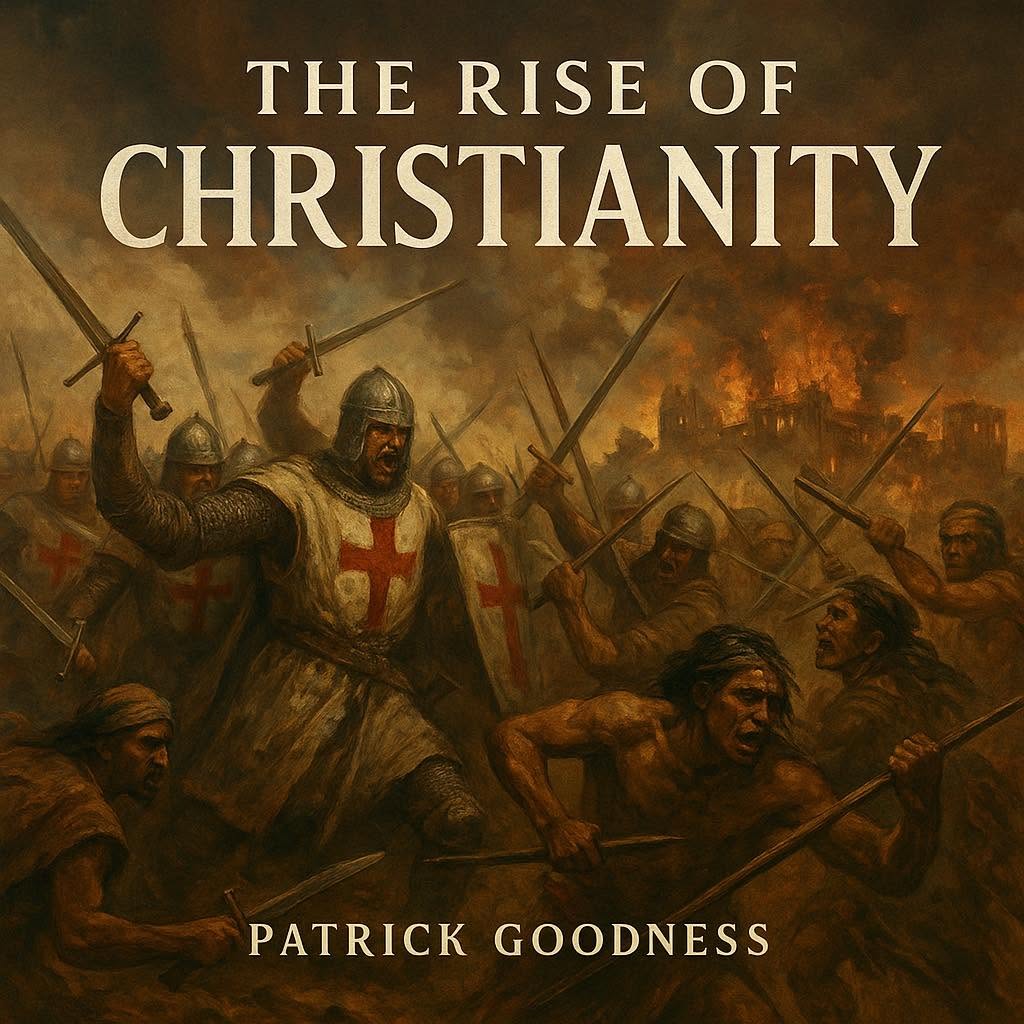
The Rise of Christianity
This essay is for those seeking a history lesson about the growth of Christianity.
For nearly two thousand years, we’ve been told that Christianity spread because it was true…an unstoppable divine message. But what if that story is more myth than fact? What if Christianity didn’t spread because of its truth, but because it was useful as a tool for the powerful…politically, socially, and imperially?
It’s time we ask a difficult question:
Did Christianity rise on the wings of spiritual enlightenment… or ride the coattails of empires?
The Illusion of Persecuted Truth
Yes, early Christians faced persecution. But so did many other movements that didn’t survive. What changed Christianity’s fate wasn’t martyrdom; it was marriage to power. By the 4th century, Constantine’s Edict of Milan legalized Christianity. By 380 CE, it became Rome’s official religion. Not because it had “won” in the marketplace of ideas, but because it was chosen by the state.
Truth didn’t make Christianity dominant.
The Roman Empire did.
When the Cross Met the Sword
After aligning with Rome, Christianity abandoned its nonviolence and became a weapon of conquest. Missionaries arrived hand-in-hand with soldiers. Indigenous peoples were converted at swordpoint. Convert or die. Churches were built on native sacred sites. Faith was no longer offered…it was enforced.
From Europe’s inquisitions to the colonization of Africa and the Americas, Christianity became a global empire dressed as a global faith.
Erasing Cultures…Blessing Obedience
Christianity didn’t just spread; it destroyed and it replaced. It called other beliefs pagan, demonic, or savage. Generations were taught to hate their ancestors’ ways. Entire cultures were whitewashed in the name of salvation.
At the same time, it offered emperors and kings the perfect belief system:
Obey authority. Turn the other cheek. Accept suffering. Pray for justice, but wait for heaven.
The Numbers Lie
One of the most common defenses of Christianity’s legitimacy is its scale. “If it weren’t true,” believers ask, “why would billions believe it?” But this appeal to popularity is not proof, it’s propaganda pretending to be logic.
Religious dominance doesn’t indicate divine truth. It reflects historical power. Christianity didn’t spread because people all over the world simultaneously arrived at the same spiritual conclusion. It spread through colonization, conquest, forced conversion, political alliance, and the slow erasure of other traditions.
If numbers proved truth, then we’d have to believe the Roman gods were once real too. Or that colonialism was righteous. Or that capitalism is morally infallible. But numbers don’t reveal what’s right. They reveal what’s successful. And Christianity, by aligning with rulers and regimes, became the most successful religion in history. Islam rose to dominance in the same way.
When a belief system is backed by armies, institutionalized by governments, taught in childhood, written into national identity, and shielded from critique, it doesn’t have to convince you. It just has to surround you. You don’t choose it. You absorb it. You inherit it. You defend it, not because you studied its claims, but because you were never really given a choice. You are Christian because you have been surrounded by Christianity since birth.
So no…Christianity’s global dominance is not evidence of divine favor.
It’s evidence of the power of empires.
Consider this possibility:
“Christianity didn’t become a dominant global religion by the power of its truth,
but by the power of its violence.”- Patrick Goodness
Ask the Hard Question
Christianity may still contain beauty, wisdom, and compassion. It’s all there. But those values are not unique to it. Many religions contain equally powerful wisdom and teachings. What made Christianity global was not simply its message, it was its merger with power and politics.
The most difficult thing for Christians to reconcile is that today’s Christianity would be unrecognizable to those who first followed Jesus. The early church was a community of the poor, the persecuted, and the radically generous…not the powerful, the political, or the prosperous. If the first Christians walked into most churches today, they wouldn’t recognize the rituals, the rhetoric, or the reverence for wealth and power. They couldn’t possibly understand all of the war and suffering and oppression done in the name of peace.